
Transportation for Medical Appointments When a Parent Stops Driving
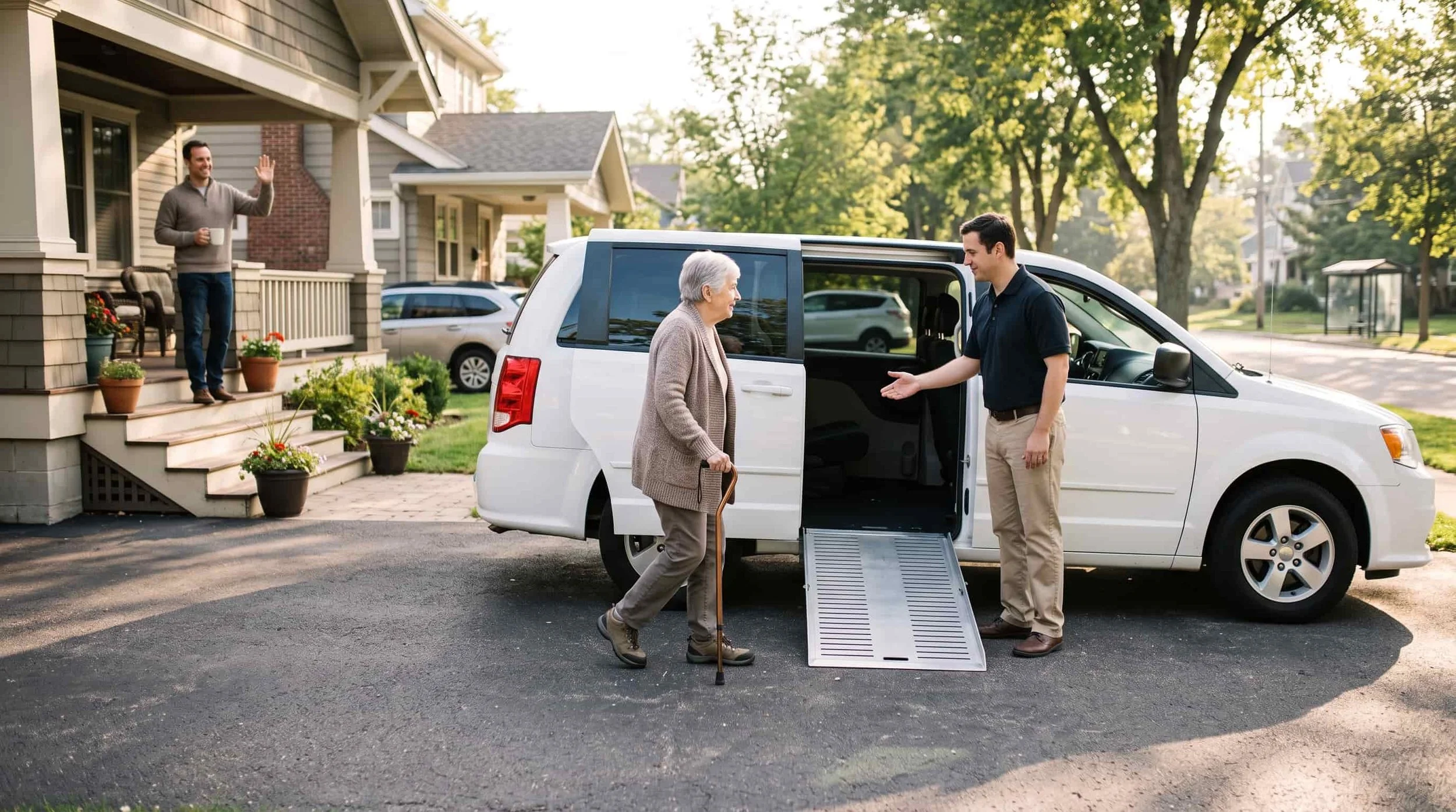
Transportation for medical appointments usually falls to the family the week a parent hands over the keys, and one driver cannot carry it alone for long.
The calendar fills up fast. A cardiology follow-up, labs, physical therapy twice a week, the dentist, and a pharmacy run add up to more trips than most working adults can absorb. Building a mix of rides now is easier than scrambling after the first missed visit.
Why Getting to Appointments Matters More Than It Looks
A missed ride turns into a missed appointment, and missed appointments change outcomes.
Research backs that up. A study of Mayo Clinic primary care visits published in the Journal of General Internal Medicine (2026) found patients who reported transportation barriers were 5.2 percentage points less likely to attend a scheduled in-person visit than patients without those barriers. The same study found transportation needs had a larger effect on attendance than other social needs it measured.
For an older adult managing several conditions, skipped visits to the compound. Medication reviews get pushed, a new symptom goes unexamined, and a problem that could have been handled in a clinic ends up in an emergency room instead.
How Do Seniors Who Can't Drive Get Around?
There are more options than most families realize, and the reliable answer is usually a combination rather than one service.
The National Institute on Aging (2023) lists state and local agencies, nonprofit organizations, companies, senior housing complexes, and community groups as sources of rides for older adults. Public transit agencies often have discounted fares for older adults and people with disabilities, and many areas have taxis and ride-sharing services. You can request a vehicle that accommodates a wheelchair, walker, or electric scooter.
Family and Friends
Family driving works well for short trips and for visits where someone should sit in and take notes. It is also the arrangement that collapses first, because it depends on one person's work schedule staying flexible for months on end.
Volunteer and Community Programs
Many counties run volunteer driver programs through an Area Agency on Aging, a senior center, or a faith community. These are often free or low cost and work best for routine appointments booked a week or two ahead. Call 800-677-1116 or search the Eldercare Locator to find what exists locally.
Public Transit, Dial-a-Ride, and Paratransit
Paratransit and dial-a-ride fill the gap for riders who cannot use a fixed bus route. Service is usually curb-to-curb, requires an eligibility application, and runs on a scheduled window rather than on demand. The application can take weeks, so it is worth starting before you need it.
Non-Emergency Medical Transportation
Scheduled medical transport covers the trips the other options cannot: wheelchair and gurney rides, dialysis three times a week, and hospital discharges. Drivers are trained for transfers, and door-through-door service means someone helps from the front door to the vehicle and back again.
The table below sorts the options by what each one actually handles well.
| Ride Option | Works Best For | Cost Notes |
|---|---|---|
| Family or friend driving | Short trips and visits where someone should sit in | No fee, and the option that wears out fastest |
| Volunteer driver program | Routine appointments booked ahead | Often free through state and local government or nonprofit programs |
| Public transit, dial-a-ride, or paratransit | Riders who can wait and board safely, with an eligibility approval | Transit agencies often offer discounted fares for older adults and people with disabilities |
| Taxi or ride-sharing service | Last-minute trips in a well-served area | Charges a fee, and some services offer older-adult discounts |
| Non-emergency medical transportation | Wheelchair, gurney, dialysis, and hospital discharge trips | Medicaid covers rides to appointments for people without access to one; Medicare covers ambulance transport for emergencies and limited nonemergencies such as dialysis |
What Is Non Emergency Medical Transportation, and How Do You Set It Up?
Non-emergency medical transportation is a scheduled ride in a vehicle equipped for a rider's needs, booked for a specific appointment rather than called in an emergency.
It is the right tool when a regular car will not work safely. That includes riders who use a wheelchair and cannot transfer easily, riders who need a gurney, and anyone leaving a hospital bed for home or rehab. A plain-language explanation of how NEMT rides work covers who uses the service and what a ride includes.
Coverage runs through the health plan more often than through the transport company. Medicaid transportation is the clearest path, since federal aging guidance notes Medicaid provides transportation to doctor's appointments for people who do not have access to a ride. Medicare is narrower, covering ambulance transport for emergencies and limited nonemergency trips such as a ride to a dialysis facility. What Medicare and Medicaid actually cover is worth reading before you assume a ride will be paid for.
Call the member services number on the back of the insurance card and ask three questions: is transportation a covered benefit, how far ahead must a ride be booked, and which companies are in the network. For a managed care plan, that office arranges it. For fee-for-service coverage, the prescribing provider is usually involved. Either way, write down the reference number for every booking.
What to Do When a Parent Refuses to Stop Driving
Lining up rides before the conversation changes how the conversation goes.
When dementia is part of the picture, the decision is not open-ended. The National Institute on Aging (2024) notes that as memory and decision-making skills get worse, it will no longer be safe for the person to be behind the wheel, and it lists new dents or scrapes on the car, confusing the brake and gas pedals, and sudden lane changes among the signs. The same guidance points to talking with the person, arranging a driving test, asking the person's doctor to deliver the message, and if necessary hiding the keys, disabling the car, or selling it.
Numbers help explain why the question comes up at all. The Centers for Disease Control and Prevention (2026) reports that in 2022 there were almost 52 million licensed drivers aged 65 and older in the United States, a 77% increase since 2004, and that drivers aged 70 and older have higher crash death rates per 1,000 crashes than drivers aged 35 to 54, largely because older bodies are more vulnerable in a crash.
Keep the focus on specific driving, not on age. Saying you are worried about a particular route or about night driving lands better than a verdict about someone's abilities. Showing a parent a booked ride for next Tuesday also makes the loss feel smaller than an open question about how they will get anywhere.
How to Share the Driving Without Burning Out
One driver doing every trip is a plan with no backup, and it tends to end badly for both people.
The warning signs are familiar to anyone who has done it: feeling exhausted, overwhelmed, or anxious, getting angry or impatient easily, and feeling disconnected from other people. Guidance for caregivers from the National Institute on Aging (2023) also suggests asking for small things first, breaking a big task into pieces, and keeping a written list of what you actually need so that offers of help turn into real help.
Transportation divides well because each trip is a separate, defined task. A sibling two hours away can take the Thursday lab draw once a month. A neighbor can handle the pharmacy. A volunteer program can cover the standing physical therapy slot. Paid transport can take the trips that need equipment or a long wait, which are the ones that eat a whole workday.
Respite is part of the same math. The same guidance suggests asking another family member to step in, hiring an aide for a few hours a week, or enrolling the older adult in an adult day care program, some of which provide their own transportation. Treat those options as maintenance rather than as a last resort.
What If Your Parent Lives Far From You?
Distance makes a reliable local service more valuable than your own availability.
Start by building a short written roster: two ride sources for routine appointments, one for wheelchair or gurney trips, and one backup for short notice. Keep phone numbers, account numbers, and booking lead times in a shared note your siblings can also see. Confirmed in advance, that list survives a weekday emergency better than a group text does.
A geriatric care manager is worth pricing out. Federal aging guidance notes these professionals, usually licensed nurses or social workers, can be especially helpful when a caregiver lives far away, and they coordinate medical services and arrange local help. Medicare and Medicaid do not pay for this, so families usually cover it.
Local coverage area matters more than company size. In Ventura County, for example, rides are arranged across specific communities rather than everywhere, and MediZoom Transportation offers scheduled wheelchair and dialysis rides across the Conejo and Heritage Valleys with door-through-door help. Ask any provider which cities they actually serve before you build a schedule around them.
Building a Plan That Holds Up
A plan works when no single trip depends on one person being free.
Write out next month's appointments, assign a ride source to each one, and mark which trips need a wheelchair, a gurney, or someone to wait. Gaps show up immediately on paper and are much cheaper to fix there than at seven in the morning on the day of a procedure.
Price matters too, and what drives the cost of a medical transport ride is mostly distance, vehicle type, wait time, staffing, and how far ahead you book. Booking early is the one lever families control completely.
Frequently Asked Questions
Can a family member ride along to the appointment?
Many medical transport services allow one companion at no extra charge, which helps when someone needs to hear what the doctor says. Confirm it when you book, since policies and vehicle capacity differ.
How far ahead should a medical transport ride be booked?
A few days of notice is usually enough for a routine appointment, and more is better for early-morning procedures or long-distance trips. Standing appointments such as dialysis are often set up as a recurring schedule.
Does a doctor have to order the ride?
For some insurance-covered trips, yes, a prescription or authorization from a licensed provider is required. Privately paid rides generally need no order at all, only the booking details.
What happens if an appointment runs long and the return ride is waiting?
Call the dispatcher as soon as you know. Wait time is often billed, and letting the company know early helps them hold the vehicle instead of reassigning it.
Can a rider stay in their own wheelchair during the trip?
In a wheelchair accessible vehicle, usually yes, with the chair secured to the vehicle floor and a separate belt for the rider. Older or damaged chairs sometimes cannot be secured properly, so mention the model when booking.
Is the driver allowed to help inside the house?
Door-through-door service means assistance from inside the doorway to the vehicle and back. Help with dressing, lifting from a bed, or household tasks falls to home care staff instead.
Sources Used
Driving Safety and Alzheimer's Disease – National Institute on Aging (2024)
Older Adult Drivers – Centers for Disease Control and Prevention (2026)
Relationship Between Unmet Transportation Needs and Missed Primary Care Appointments: An Observational Study – Journal of General Internal Medicine (2026)
Services for Older Adults Living at Home – National Institute on Aging (2023)
Taking Care of Yourself: Tips for Caregivers – National Institute on Aging (2023)
Area Agency On Aging – Region IV Area Agency on Aging
Paratransit: Bridging The Gap for Accessible Transportation – American Council of the Blind
Dial-A-Ride – Arvin, CA
