
Wheelchair Transportation: What It Is and How It Works
Disclaimer: This article is for general educational purposes only and is not a substitute for professional medical advice, diagnosis, or treatment. Always talk with your doctor or a qualified health provider about your own health.
Getting to a medical appointment sounds simple until a wheelchair, a walker, or the loss of a driver's license is part of the picture. Suddenly a routine visit to the doctor or a dialysis session becomes a logistics problem for the whole family. This is the gap that non-emergency medical transportation fills, and wheelchair transportation is the part of it built for riders who cannot use an ordinary car. This guide explains what wheelchair transportation is, how a ride actually works, who it helps, and what to expect on the day, so the whole thing feels manageable rather than mysterious. It is the kind of everyday support MediZoom Transportation provides across Ventura County.
What Non-Emergency Medical Transportation Means
Non-emergency medical transportation, often shortened to NEMT, is scheduled, non-urgent transportation for people who need help getting to and from medical care but do not need a 911 ambulance. The passenger is medically stable; what they need is a safe, accessible ride and a hand along the way. NEMT covers riders who can walk with some help, riders who use a wheelchair, and riders who travel on a stretcher. You may also hear a wheelchair-accessible NEMT vehicle called an ambulette.
The point of this service is dignity as much as logistics. Instead of being lifted awkwardly in and out of a sedan, a rider stays in their own wheelchair from home to the clinic and back. That protects both comfort and safety, and it lets a person keep some independence even when driving is no longer an option.
Those small comforts add up over months of appointments. A rider who feels secure and respected on every trip is far more likely to keep up with the care that keeps them well, and a family that trusts the service can finally stop treating every appointment as a scheduling emergency.
How It Differs From an Ambulance
An ambulance is for emergencies, staffed by paramedics and stocked with life-support equipment for urgent, unplanned situations. Wheelchair transportation is the opposite: planned in advance, for stable passengers, focused on safe and comfortable travel rather than emergency care. Because it is scheduled, you book it ahead for a specific appointment, which makes it dependable in a way that flagging down a ride never is. For a fuller primer, MediZoom's guide to non-emergency medical transportation covers the basics.
Who Wheelchair Transportation Is For
Wheelchair transportation serves people who are medically stable but face real barriers to ordinary travel. That includes wheelchair and scooter users, older adults who no longer drive, and anyone heading to recurring care such as dialysis, chemotherapy, physical therapy, or a hospital discharge. The National Institute on Aging notes that when an older person can no longer drive, transportation services can take them to and from medical appointments, and that a vehicle can be requested to accommodate a wheelchair, walker, or electric scooter.
The need is especially sharp for people with mobility limitations. According to CDC data, adults with a disability are nearly three times more likely to lack reliable transportation than adults without one, at about 14 percent compared with roughly 5 percent. For a wheelchair user, a standard rideshare or a favor from a neighbor often simply will not work, which is where accessible transport becomes essential rather than optional.
It is also a need that grows quietly over time. A family may manage rides on their own for a while, then find that appointments pile up, schedules clash, and lifting a loved one becomes unsafe. Recognizing when it is time to hand this off to professionals can spare everyone a lot of strain, and it often makes the difference between a parent making every appointment and missing some.
Why Reliable Rides Matter
Missing a ride is not a small thing when it means missing care. A CDC report found that in 2022, about 5.7 percent of U.S. adults lacked reliable transportation for daily living, including getting to medical appointments. When the care is something like dialysis, which cannot be skipped, dependable transportation is part of staying healthy, not a convenience.
A missed dialysis session or a skipped follow-up is not just an inconvenience; it can set back a person's health and lead to bigger problems down the line. That is why a ride you can count on, booked ahead and built around the appointment, is worth so much to families managing ongoing care.
The burden usually lands on families. The National Aging and Disability Transportation Center notes that transportation is one of the most common supports family caregivers provide, with a large majority arranging or providing rides for their loved ones. A reliable transportation service gives those caregivers their time back and takes a recurring worry off the calendar.
How a Wheelchair Ride Actually Works
Boarding and Securing the Wheelchair
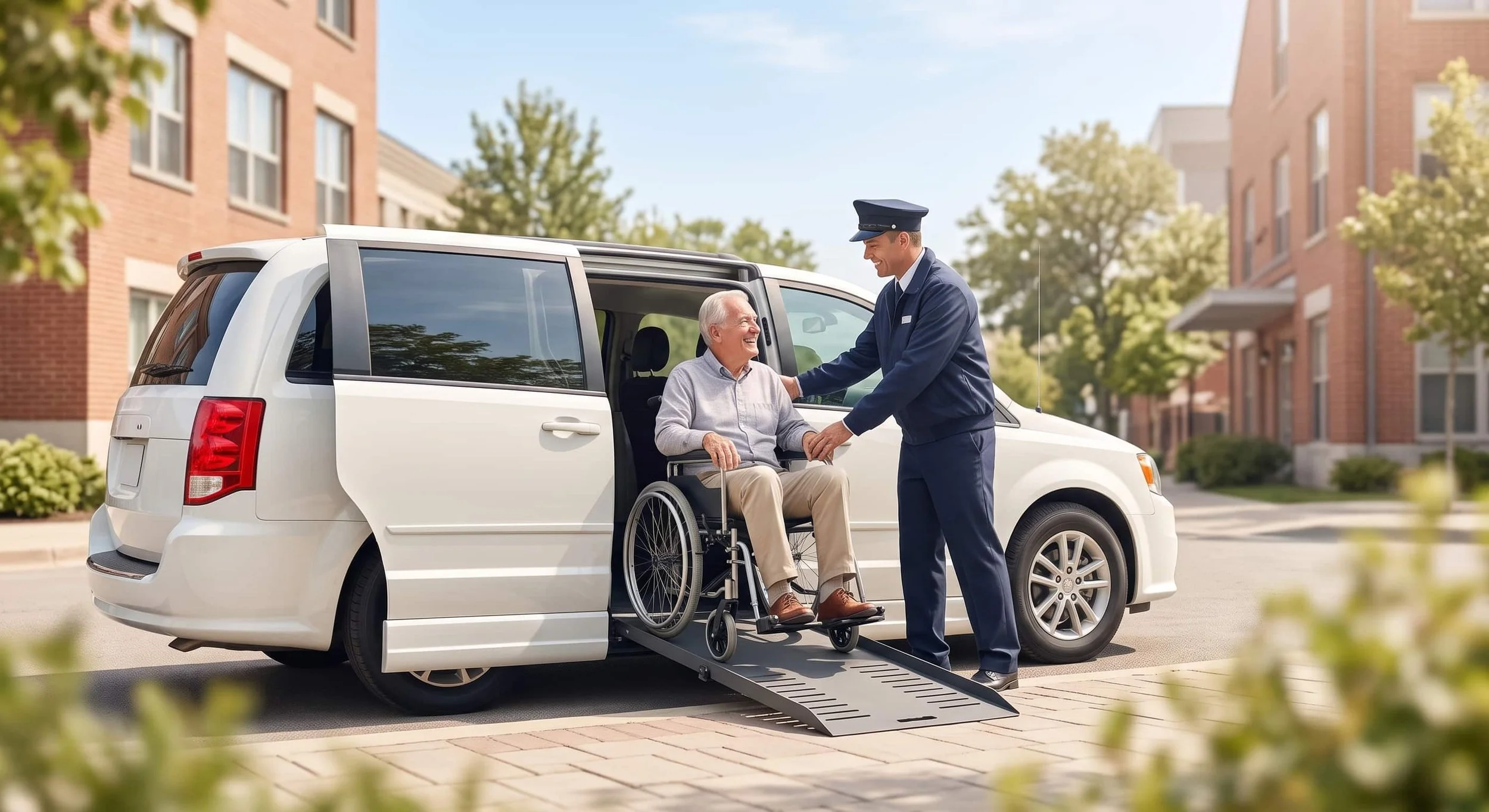
A wheelchair-accessible vehicle uses a ramp or a lift so the rider can board while seated in their own wheelchair, with no risky transfers in and out of a car seat. Once aboard, the wheelchair is locked in place, typically with a four-point tie-down that anchors it to the floor, and the rider wears a separate lap-and-shoulder belt. The chair is positioned and secured before the vehicle moves, so the person rides safely and comfortably the whole way.
Door-Through-Door Service
Good wheelchair transportation is about more than the drive. The NADTC describes assisted transportation, often called door-to-door or door-through-door service, as help for people who need more than a ride, with an escort from the door to the vehicle and support throughout the trip. In practice that means a driver who helps the rider from inside the home to the vehicle and again at the destination, rather than leaving them at the curb. For someone who is unsteady on their feet or fully reliant on a wheelchair, that extra help at each doorway is often the difference between a trip they can take and one they cannot. Many services also let a companion or family member ride along, which can be reassuring on a medical visit.
What to Expect When You Book
Booking a wheelchair ride is straightforward, and a good provider makes it feel that way. You give the date, time, pickup and drop-off, and the kind of assistance needed, and the provider matches the right vehicle and driver. It helps to book as early as you can, especially for a standing schedule like weekly dialysis, so the same reliable arrangement is in place trip after trip. Drivers matter here as much as vehicles. MediZoom's veteran-owned team is trained in passenger assistance, with drivers who are CPR, First Aid, and AED certified and background-checked, which is exactly the kind of care you want for a parent or spouse. A calm, patient driver who knows how to help someone board safely can turn a nerve-wracking outing into an easy one. If you are new to this and have questions about scheduling, wait times, or what to have ready, MediZoom's frequently asked questions are a good place to start.
Getting Around Ventura County
Local knowledge counts when the trip is to a specific clinic, dialysis center, or hospital. MediZoom serves Ventura County, including Camarillo, Oxnard, Thousand Oaks, and the surrounding communities, with both local trips and longer round-trip rides. Accessible transportation is also a right, not a favor: the National Aging and Disability Transportation Center notes that the Americans with Disabilities Act defines accessible transportation as a civil right for people who cannot use standard transit, and that a companion can often ride along. Choosing a local provider that knows the county's medical facilities tends to make each trip smoother and less stressful.
Longer trips are part of the picture too. A specialist may be an hour away, or a hospital discharge may send a patient home across the county, and a local NEMT provider can handle those round trips with the same accessible vehicles and trained drivers. Knowing the same team can cover both a short clinic run and a longer medical trip keeps things simple for a family.
Booking a Ride
It is worth asking a provider a few plain questions up front: what kind of vehicles they run, how drivers are trained, whether a companion can ride, and how far ahead to book. Clear answers are a good sign, so you know what you are getting before the first trip.
When wheelchair transportation is handled well, it fades into the background and simply gets your loved one where they need to be, safely and on time. If you are arranging rides to appointments, dialysis, or a hospital discharge in Ventura County, you can request a ride with MediZoom and talk through exactly what your family needs. The right partner turns a stressful logistics problem into one less thing to worry about.
Frequently Asked Questions
What is non-emergency medical transportation (NEMT)?
NEMT is scheduled, non-urgent transportation that helps people get to and from medical care when they do not need a 911 ambulance but cannot easily use a regular car, bus, or rideshare. It serves passengers who can walk with help, who use a wheelchair, or who travel on a stretcher.
What is an ambulette?
An ambulette is a common name for a non-emergency medical transport vehicle, usually a wheelchair-accessible van with a ramp or lift. It carries passengers who need accessible, supported transportation but not emergency medical care, with drivers trained in passenger assistance rather than paramedic care.
How do wheelchair-accessible vehicles secure a wheelchair?
The vehicle uses a ramp or lift to board the wheelchair, then locks it in place, typically with a four-point tie-down that anchors the chair to the floor, plus a separate lap-and-shoulder belt for the rider. The chair is positioned and secured before the vehicle moves, so the person rides safely in their own wheelchair.
Who needs non-emergency medical transport?
It is for people who are medically stable but face mobility or health barriers to ordinary travel, including wheelchair users, older adults who no longer drive, and people going to recurring care like dialysis, chemotherapy, or physical therapy. The National Institute on Aging notes a wheelchair-accessible vehicle can be requested when someone can no longer drive.
How is NEMT different from an ambulance?
An ambulance is for medical emergencies and carries paramedics and life-support equipment. Non-emergency medical transportation is for planned, non-urgent trips where the passenger is stable but needs accessible, assisted travel, so it is booked in advance rather than called in a crisis, and it is a far better fit for the routine trips that make up most of a person's medical calendar.
What is door-through-door service?
Door-through-door service means the driver helps the rider from inside their home to the vehicle and again at the destination, rather than leaving them at the curb. It is meant for people who need more than a ride, and it often allows a companion or family member to travel along.
