
NEMT vs. an Ambulance: Which One Do You Actually Need?
Disclaimer: This article is for general educational purposes only and is not a substitute for professional medical advice, diagnosis, or treatment. Always talk with your doctor or a qualified health provider about your own health.
If a parent needs a ride to dialysis or a way home after a procedure, and it is not an emergency, you may still wonder whether to call an ambulance. In most stable cases, the answer is no. A scheduled non-emergency medical transportation ride is the better fit.
This guide explains the plain difference between an ambulance and non-emergency medical transportation. You will learn who staffs each one, when to call 911, and when a booked medical transport ride is the safe and affordable choice for Ventura County families.
What Is the Difference Between an Ambulance and Non-Emergency Medical Transportation?
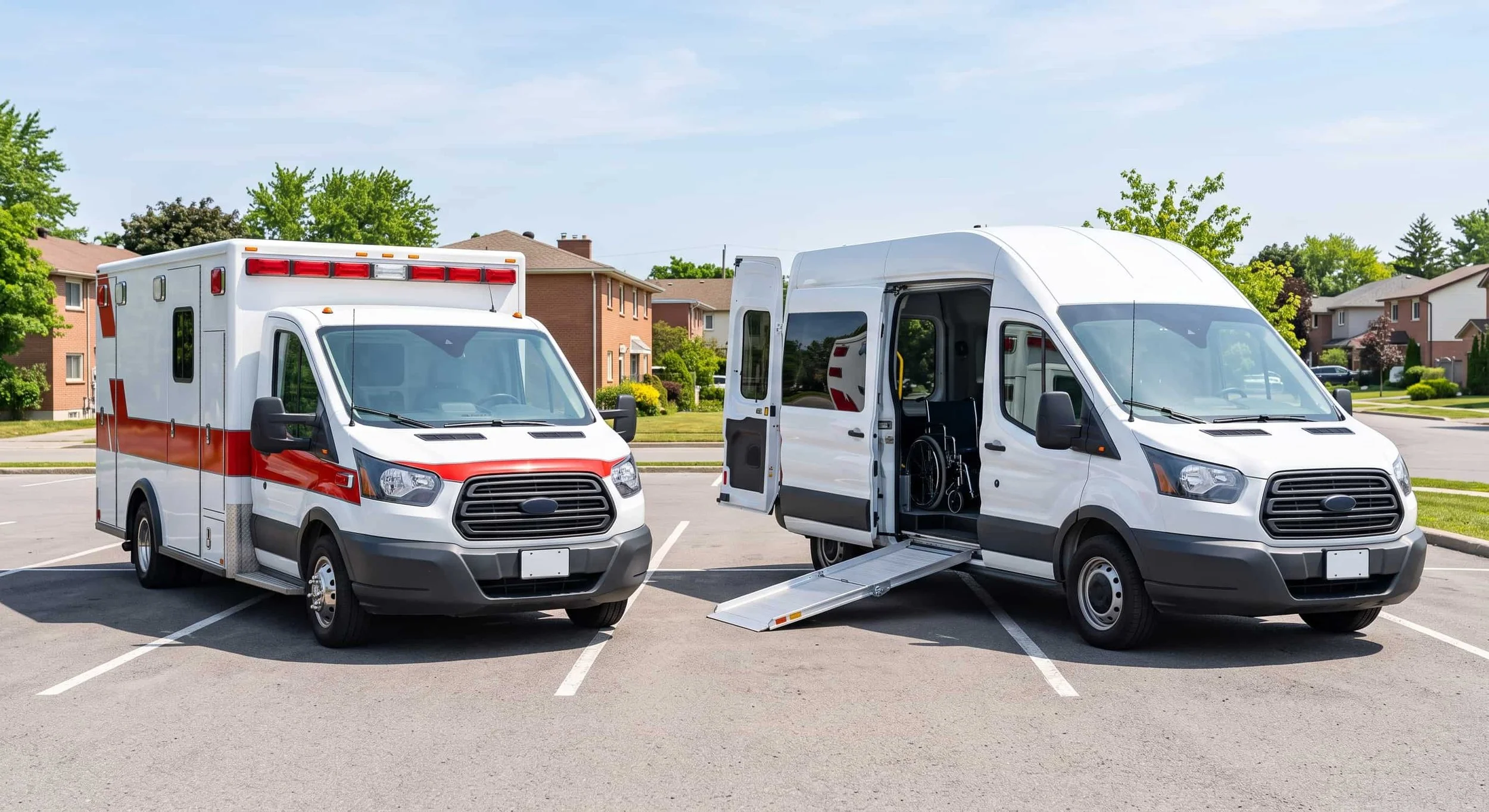
An ambulance is built for medical emergencies, while non-emergency medical transportation is a scheduled ride for stable patients who do not need urgent care. That single idea, urgent versus planned, is the heart of the whole comparison. Everything else follows from it.
An ambulance is part of the emergency system. You reach it by calling 911, it responds fast, and it carries equipment to treat someone whose condition could get worse on the way to the hospital. Non-emergency medical transportation, often called NEMT or medical transport, is something you book in advance for a person who is medically stable but cannot safely use a regular car, taxi, or rideshare.
The two services answer different questions. An ambulance answers, this person needs help right now. A non-emergency ride answers, this person has an appointment and needs a safe, comfortable way to get there and back.
● Ambulance: an emergency response for urgent or life-threatening situations, reached by calling 911.
● Non-emergency medical transportation: a planned, booked ride for stable patients going to routine care.
● Ambulance: staffed to give medical treatment during the trip.
● Medical transport: staffed to help you travel safely and with dignity, door through door.
It also helps to picture a normal day. Someone might have a standing dialysis schedule, a follow-up across town, or a return trip after an outpatient visit. None of that calls for lights and sirens. It calls for a reliable ride and a helping hand.
At MediZoom Transportation, we focus on that second lane. We serve gurney, wheelchair, and ambulatory clients across Ventura County, including Camarillo, Oxnard, and Thousand Oaks, who need dependable rides to care that is scheduled, not sudden.
When Should You Call 911 for an Ambulance?
Call 911 for an ambulance any time you face a possible life-threatening emergency. This is the one situation where a scheduled ride is never the right call. When a life may be at risk, an ambulance and trained crew need to reach the person as fast as possible.
It helps to know a few clear warning signs ahead of time, so you can act with confidence. The federal health library describes when to use emergency medical services, and it points to 911 for anything that seems life-threatening.
Some situations point clearly to an ambulance rather than a booked ride:
Signs of a stroke, such as a drooping face, weakness on one side, or slurred speech. Public health guidance on the signs of a stroke urges you to call 911 right away.
Chest pain, pressure, or other signs of a heart attack, where dialing 911 should be the first step.
Trouble breathing, severe bleeding, or a sudden loss of consciousness.
A serious fall, a bad injury, or any sudden change that frightens you.
One more point that trips people up: do not try to drive the person yourself in these moments, and do not book a regular ride. A condition can change fast, and an ambulance crew can begin care on the way to the hospital. That head start can matter a great deal.
If you are ever unsure, treat it as an emergency and call 911. Dispatchers are trained to sort out what you need, and it is always better to be safe. A non-emergency ride is for planned trips, not for a crisis that is unfolding in front of you.
Who Staffs an Ambulance Versus a Non-Emergency Medical Transportation Vehicle?
An ambulance is staffed by emergency medical technicians or paramedics, while a non-emergency medical transportation vehicle is run by trained drivers whose job is safe and comfortable transport. The staffing matches the purpose of each service.
Ambulance crews are trained to give care during the ride. EMTs provide basic emergency care, and paramedics can perform more advanced procedures on the way to the hospital. Their focus is treatment in motion, because their patients may need help at any moment.
A non-emergency ride is different by design. The staff are professional drivers who help clients get from their door to the vehicle, ride securely, and reach the appointment and get home again. They are not there to deliver emergency treatment, and their clients do not need it.
That does not mean training is optional. Our drivers at MediZoom are certified in CPR, first aid, and AED use, and they pass background checks and screening before they ever pick up a client. So you get careful, prepared people for a calm, planned trip, without the cost and urgency of an emergency crew.
Is an Ambulance More Expensive Than Non-Emergency Medical Transportation?
Yes, an ambulance almost always costs far more than non-emergency medical transportation, because an ambulance is an emergency service. It sends a trained medical crew and equipment to you on short notice, and that response carries a much higher price than a planned ride.
Coverage rules reflect this too. For example, Medicare covers ground ambulance transportation mainly when traveling any other way could endanger your health, and it may cover an air ambulance only when you need rapid transport that ground travel cannot provide. Those are narrow, medically necessary situations, not routine appointment trips.
The takeaway on ambulance cost is simple. When a person is stable and the trip is planned, using an ambulance means paying emergency prices for a service they do not need. A scheduled medical transportation ride is the more affordable and appropriate option, and it frees the emergency system for true emergencies.
This is why so many families and case managers look for medicare transportation options and dependable medical transportation near me for regular visits, rather than reaching for 911 out of habit.
When Is Non-Emergency Medical Transportation the Right Choice?
Non-emergency medical transportation is the right choice whenever a stable person needs a safe ride to scheduled care but a regular car is not workable. Maybe they use a wheelchair, cannot transfer without help, or simply cannot drive after a treatment. The need is real, but it is not an emergency.
These are the trips medical transport was made for. If you want the basics, our overview of what non-emergency medical transportation is walks through how the rides work and who uses them.
Dialysis appointments, often several times a week.
Doctor follow-ups, lab work, and specialist visits.
Physical therapy and other ongoing treatment.
Rides home after an outpatient procedure, when the patient is stable but should not drive.
Good medical transportation services also think about comfort and dignity, not just the miles. Our door-through-door approach means a client is supported from inside their home, into the vehicle, and all the way to the appointment and back. A companion may ride along at no extra cost, which many families appreciate.
For transportation for patients who travel these routes again and again, reliability matters as much as safety. Knowing a trained driver will show up on time takes a real weight off a caregiver, and it keeps important care from being missed.
There is also peace of mind in the small details. The right vehicle, secure restraints, and a driver who knows how to help someone in and out safely can turn a stressful outing into a calm one. For families searching for medical transportation near me, that steadiness is often what they are really after.
Can You Use Non-Emergency Medical Transportation for a Hospital Discharge?
Yes, non-emergency medical transportation is a common and sensible choice for a hospital discharge when the patient is stable. Once a doctor clears someone to leave, the trip home or to a rehab facility is a planned ride, not an emergency, and a booked medical transport service fits it well.
These transfers work best when they are coordinated with the facility. We schedule discharge and post-procedure rides in step with the care team, so the pickup lines up with the release, and the client moves from bed to vehicle to home without a stressful gap. Wheelchair-accessible vans with ramps and secure restraints make the trip safe for clients who cannot use a standard car.
So the honest rule of thumb is short. If it is a true emergency, call 911 for an ambulance. If it is a planned trip and the person is stable, a professional non-emergency ride is the safe, dependable, and more affordable choice.
When you are ready, you can book a ride with MediZoom Transportation for wheelchair, gurney, and ambulatory clients across Ventura County. Call or text us at 844-952-3371, and we will confirm the details and get your loved one where they need to be.
Frequently Asked Questions
What is the difference between an ambulance and non-emergency medical transportation?
An ambulance is an emergency service reached by calling 911, staffed to treat urgent or life-threatening conditions during the trip. Non-emergency medical transportation is a scheduled ride for stable patients who need safe transport to routine care but do not need emergency treatment.
When should you call 911 for an ambulance?
Call 911 for an ambulance any time you face a possible life-threatening emergency, such as signs of a stroke or heart attack, trouble breathing, severe bleeding, or a sudden loss of consciousness. When in doubt, treat it as an emergency and call 911.
Who staffs an ambulance versus a non-emergency medical transportation vehicle?
An ambulance is staffed by emergency medical technicians or paramedics who provide care during the ride. A non-emergency medical transportation vehicle is run by trained drivers who focus on safe, comfortable transport and are certified in CPR, first aid, and AED use.
Is an ambulance more expensive than non-emergency medical transportation?
Yes, an ambulance almost always costs far more because it is an emergency service that sends a medical crew and equipment on short notice. For a stable patient with a planned trip, a scheduled medical transport ride is the more affordable and appropriate option.
When is non-emergency medical transportation the right choice?
It is the right choice whenever a stable person needs a safe ride to scheduled care but a regular car will not work, such as dialysis, follow-ups, therapy, or a ride home after a procedure. The need is real, but it is not an emergency.
Can you use non-emergency medical transportation for a hospital discharge?
Yes. Once a doctor clears a stable patient to leave, the trip home or to rehab is a planned ride that a non-emergency medical transportation service can handle. These rides are best when coordinated with the facility so the pickup matches the release time.
