
Why Wheelchair Users Should Face Forward During Transport
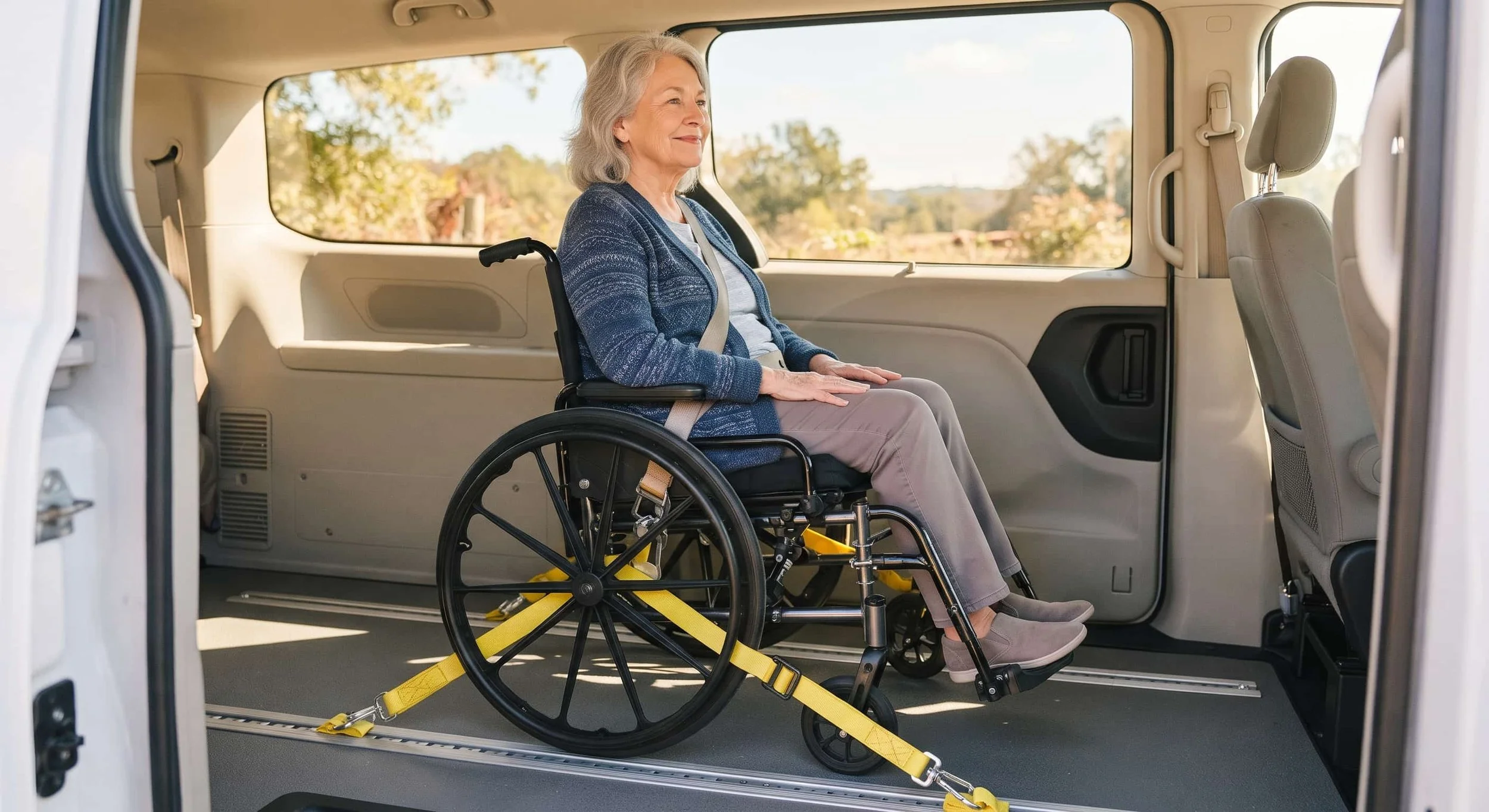
If you use a wheelchair, the way it sits in the vehicle matters. Facing forward, with the chair locked in place, is the safest way to ride.
Good wheelchair securement means the wheelchair faces the front of the vehicle and is held by straps made for the job. It lets the seat belt and the tie-downs work together if the vehicle stops hard.
Why Should a Wheelchair Face Forward During Transport?
A wheelchair should face forward because that is how the safety system is built to work. In a forward-facing position, the tie-down straps and the seat belt pull against crash forces the way they were designed and tested to.
When a vehicle brakes hard or is hit, everything inside keeps moving forward. A forward-facing chair that is locked down moves with the belt and straps. A chair turned to the side has little holding it against that force, so it can tip or slide.
Federal rules reflect this. On ADA-compliant buses and vans, securement areas must be forward-facing, or rear-facing with a padded barrier, and side-facing is not allowed, according to 49 CFR 38.23.
Wheelchair Securement Basics
Wheelchair securement is the process of locking a wheelchair to the vehicle so it cannot roll, tip, or slide during the ride. It turns a rolling chair into a fixed seat for the length of the trip.
Loose Or Backward Rides Are Not Safe
Some riders have felt a wheelchair drift backward on a bus, or shift with every turn. That unsteady feeling is real, and it often means the chair was left unsecured or pointed the wrong way. Bracing yourself for a whole trip is tiring, and it is not how safe transport should feel.
If that has happened to you, it was not your fault, and it does not have to be normal. Gripping the wheels harder will not fix it. What helps is a chair that faces forward and is locked to the vehicle, so you can sit back and let the equipment do the holding.
Securing The Chair And Belting The Rider
Safe securement means the wheelchair is fastened to the vehicle and the rider is protected by a lap and shoulder belt.
A seat belt alone cannot hold the chair, and locking the chair alone does not protect the person inside it, so both are needed on every ride.
Wheelchair Tie Down Straps and the 4-Point System
The most common way to hold a wheelchair in place uses wheelchair tie down straps in a four-point setup, with two straps at the front and two at the back.
How The 4-Point Tie-Down Works
Each strap connects the wheelchair frame to an anchor on the vehicle floor. Tightened with no slack, the four straps stop the chair from rolling forward, sliding back, or turning to the side. A crash-tested lap and shoulder belt then protects the rider.
The straps should attach to strong, marked points on the frame, not to armrests, footrests, or wheels. Those parts can move or come off, so a strap placed there will not hold in a crash.
Crash-Tested Wheelchairs And The WC19 Standard
Some wheelchairs are built and tested to ride safely in a vehicle. These are often called WC19 wheelchairs, made to the ANSI/RESNA WC-4:2017 standard, with four clearly marked securement points where straps attach.
The matching tie-down and belt kit, sometimes labeled a WTORS, is crash-tested too. Using tested equipment gives the straps and belts the best chance to do their job in a crash. Not every rider has a WC19 chair, and that is okay, but it helps to know the option exists.
Securement Do's And Don'ts
A few simple habits make a wheelchair ride safer. The table below sums up what helps and what to avoid, drawn from transportation safety guidance for drivers and riders.
| Do | Avoid |
|---|---|
| Face the wheelchair toward the front of the vehicle | Riding sideways, or backward without a padded barrier |
| Use a four-point tie-down with four straps | Trusting the wheelchair brakes or one strap to hold the chair |
| Attach straps to marked, solid frame points | Hooking straps onto armrests, footrests, or wheels |
| Wear a crash-tested lap and shoulder belt | Using a seat belt in place of securing the chair |
| Let the trained driver lock the chair down | Leaving slack in the straps before the ride starts |
None of these steps take long, and together they keep the chair from moving during the ride.
Safety Features of a Wheelchair Accessible Vehicle
A wheelchair accessible vehicle needs more than a ramp. Its safety depends on the ramp or lift, the securement system, and a driver trained to use both.
Ramps, Lifts, And Anchor Points
A ramp or powered lift lets a rider board without leaving the wheelchair. Inside, anchor tracks or floor points give the straps something strong to hold. Wide doors and a low floor make the whole thing easier for riders who move slowly or use a walker.
A Wheelchair Accessible Van Built For The Rider
In a well set-up wheelchair accessible van, there is room to place the chair facing forward and secure it properly. The belt is fitted across the rider, low on the hips and across the chest, not the stomach. Small details like these keep a routine trip calm and safe.
Signs Of A Safe Accessible Van
You do not need to be an expert to spot a safe vehicle. A few features tend to separate a proper accessible van from a car with a ramp added on:
● A ramp or powered lift that works smoothly and locks in place
● Floor anchor points and a full four-point tie-down set
● A lap and shoulder belt at the securement spot, not just a chair strap
● Enough room to position the wheelchair facing forward
● A driver trained to secure the chair and check the belt
If a provider can point to each of these, that is a strong sign your ride was set up with safety in mind. If something is missing, it is fair to ask about it before you travel.
Whose Job Is It to Secure the Wheelchair?
Securing the wheelchair is the driver's job, not the rider's. Transportation providers are responsible for safe, nondiscriminatory service, which includes training staff to use securement equipment correctly.
You should not have to fasten your own straps or worry that they were skipped. You can ask the driver to secure the chair, and you can ask them to check the belt fit before the van moves. A good driver welcomes those questions.
You also cannot be forced out of your wheelchair. A rider may choose to move to a vehicle seat, but that is always your decision, never a requirement. Staying in your own chair, secured facing forward, is a safe and normal way to travel.
Your Right to Safe Non Emergency Medical Transportation
Safe, accessible transport is your right. Non-emergency medical transportation exists so people can reach care even when driving is not an option, and it should always be delivered safely.
The Basics Of Safe Accessible Transport
Safe service means a forward-facing seat, a chair that is properly secured, and a driver trained to do it. According to the CDC (2026), more than 1 in 4 U.S. adults live with a disability, and 12.2% have a mobility disability that makes walking or climbing stairs hard, per the CDC's disability data.
Non Emergency Medical Transportation And Medicaid
For many riders, these trips are a covered benefit. Longstanding federal rules require state Medicaid programs to assure necessary transportation to and from care, according to Medicaid.gov. Coverage details and who qualifies vary by state, so it helps to confirm with your own program.
Whether you call it NEMT transportation, non emergency transportation, or medicaid transportation, the safety basics stay the same. The chair should face forward and be secured, and the rider should be belted.
A Few Questions To Ask Before You Book
When you search for medical transport near me, you can compare more than price. Ask each provider how the wheelchair will be secured, whether it will face forward, and how their drivers are trained.
A local team like MediZoom Transportation, which serves Ventura County, can walk through these questions before your trip. Knowing the plan ahead of time takes the worry out of the ride.
Frequently Asked Questions
Can a wheelchair face sideways in a van?
No. On ADA-compliant buses and vans, securement areas must be forward-facing, or rear-facing with a padded barrier. Side-facing securement is not allowed because it does not protect the rider well in a crash or a sudden stop.
How many straps hold a wheelchair in place?
The most common setup uses four straps, two at the front and two at the back, called a four-point tie-down. On top of that, the rider wears a lap and shoulder belt. The straps hold the chair, and the belt holds the person.
What is a WC19 wheelchair?
A WC19 wheelchair is one designed and crash-tested to be used as a seat in a moving vehicle. It has four clearly marked securement points made to the ANSI/RESNA WC-4:2017 standard, so tie-down straps can attach to strong parts of the frame.
Do I have to wear a seat belt in a wheelchair van?
Policies vary by provider and by state. A lap and shoulder belt is strongly recommended for safety, and it is never a substitute for securing the wheelchair itself. Both the chair and the rider need their own restraint.
Is non-emergency medical transportation covered by Medicaid?
In general terms, yes. Longstanding federal rules require state Medicaid programs to assure necessary transportation to and from care. Coverage details and who qualifies vary by state, so it helps to confirm with your own program or provider.
How do I know if a wheelchair van is safe before I book?
Ask a few plain questions. Find out whether the wheelchair will face forward, how it will be secured, and whether the driver is trained in securement. A provider that answers clearly is a good sign.
