
Hospital-to-Rehab and Hospital-to-Home Transfers Explained
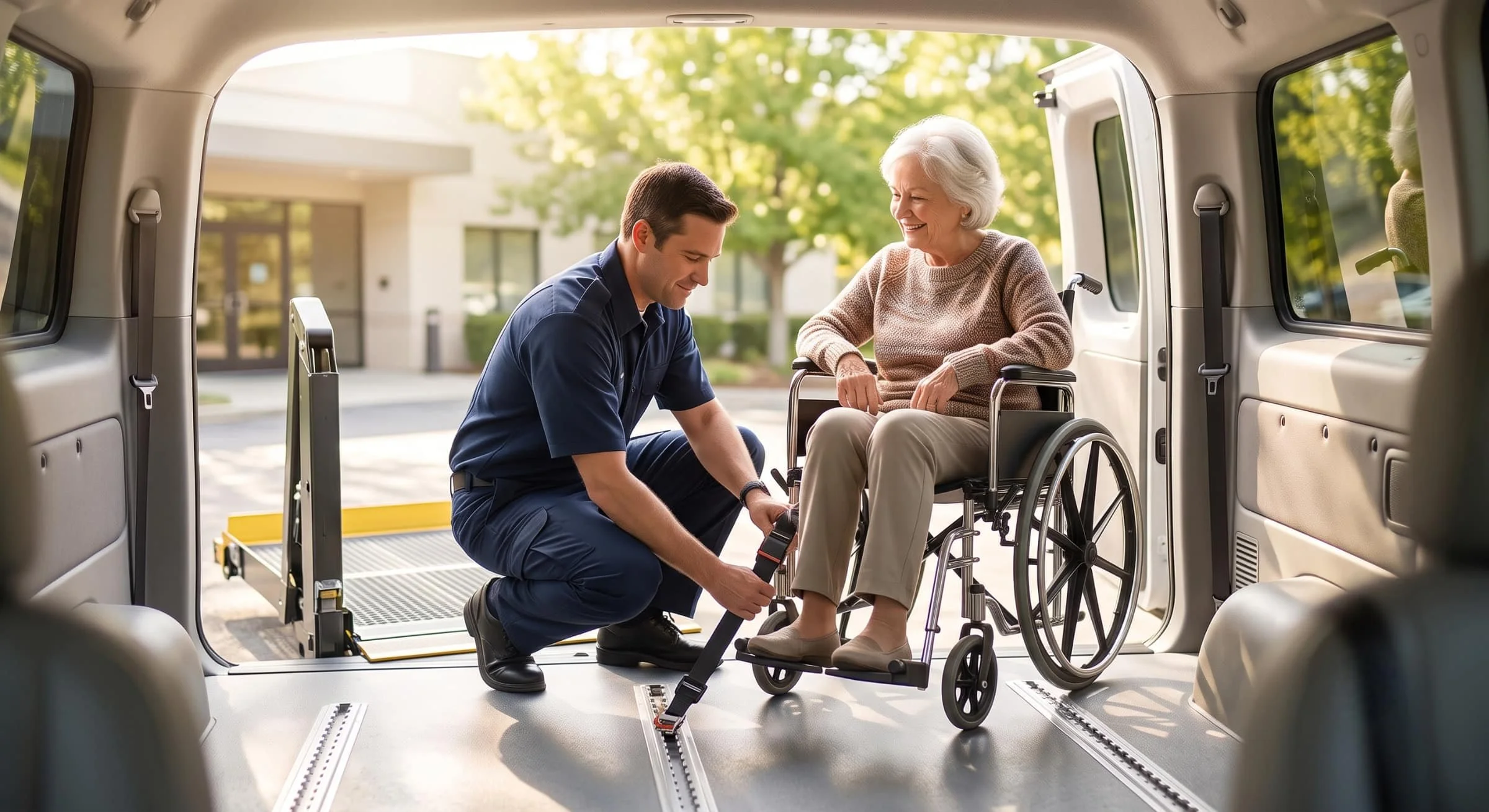
Leaving the hospital should be the beginning of your recovery – not the start of another challenge. Yet for many patients, getting from the hospital to the next stage of care isn't as simple as getting into a car. You may still be recovering from surgery, feeling too weak to travel safely, relying on a wheelchair, or requiring transportation while lying down. In these situations, having the right medical transportation isn't just convenient – it's an essential part of your recovery.
At MediZoom Transportation, we understand that every hospital discharge is different. As a veteran-owned Non-Emergency Medical Transportation (NEMT) provider serving Ventura County, we help patients make safe, comfortable transitions from the hospital to rehabilitation centers, skilled nursing facilities, assisted living communities, or back home. Working alongside healthcare professionals and caregivers, we help ensure each ride is planned around the patient's medical needs – not just the destination.
What Happens at Discharge
Before you leave, the hospital builds a discharge plan. The MedlinePlus medical encyclopedia explains that a social worker, nurse, or doctor helps decide where you should go next. The choice depends on how much care you still need during your recovery.
Home, Rehab, or Skilled Nursing
Most people hope to go straight home. Sometimes that works. Other times, recovery is slower than expected. The care team may send you to a nursing home or rehabilitation center first. Each choice needs a safe ride, and the vehicle should fit your condition.
When You Need More Care First
MedlinePlus notes that some patients need more care than family can give at home. Before going home, a person should be able to move safely with a cane, walker, or wheelchair. They should get in and out of bed and move between rooms. If that is not yet possible, a short stay in rehab or skilled nursing can help. When they are ready, transportation after hospital discharge brings them the rest of the way home.
Matching the Vehicle to the Patient
The most important part of a transfer is the vehicle. The right one depends on one simple question: can the patient sit, or must they lie flat?
When the Patient Can Sit
Some patients can sit up for the ride. If they can walk with a little help, an ambulatory ride works. If they stay in a wheelchair, a wheelchair van is used. The chair is locked down with securement straps, and the rider wears a seatbelt. This covers most medical patient transport needs.
When the Patient Must Lie Flat
Other patients cannot sit up safely. They may be very weak or recovering from major surgery. For them, a gurney or stretcher ride is used. The patient travels lying down, secured and monitored the whole way. This is a key part of safe hospital transport services.
Coordinating With the Discharge Team
A smooth hospital transfer doesn't happen by accident – it starts with careful planning. Unlike an emergency ambulance response, non-emergency hospital transportation is coordinated in advance to make the transition as safe and stress-free as possible. Before the patient ever leaves the hospital, the transportation provider works closely with the discharge planner, nurses, and care team to confirm the pickup time, destination, and the level of assistance the patient will need during the trip.
That preparation makes all the difference. Instead of long waits, confusion, or last-minute changes, everyone knows what to expect. The appropriate vehicle arrives with the right equipment, whether the patient requires a wheelchair, stretcher, or additional mobility support. The same level of planning is just as important for scheduled medical transportation to the hospital, helping patients arrive on time for planned admissions, surgeries, treatments, or other medical procedures without unnecessary stress.
What to Expect on Transfer Day
On the day of the transfer, the goal is simple: make the patient feel safe, comfortable, and cared for from beginning to end. The driver confirms the details, arrives with the appropriate vehicle, and assists the patient from the hospital room or designated pickup area. Wheelchairs, walkers, oxygen equipment, and other medical necessities are handled with care so the patient can focus on recovering – not worrying about the trip.
Once on the road, comfort and safety remain the priority. Patients are properly secured, transported with gentle care, and given the time and attention they deserve. Something as simple as a warm blanket, a reassuring conversation, or a smooth ride can make an overwhelming day feel much more manageable. Upon arrival, the driver helps the patient safely into their home or care facility and, when requested, lets family members know their loved one has arrived safely. It's these thoughtful details that turn transportation into an important part of the healing process.
Rides After Surgery
For patients recovering from surgery, planning reliable transportation is even more important. After receiving anesthesia or sedation, it's unsafe – and often prohibited – to drive. Most hospitals and outpatient surgery centers require patients to have transportation arranged before they can be discharged because medications can impair judgment, balance, and reaction time for several hours.
That's where professional medical transportation becomes invaluable. A trained driver ensures patients get home safely, assists them into their residence, and helps make the first moments of recovery as easy as possible. For someone living alone or without nearby family, having dependable transportation can provide peace of mind and help create the best possible start to the recovery process.
Getting Home Safely
A hospital stay is hard on a patient and a family. The trip out should be the easy part. A planned transfer, with the right vehicle and a caring driver, turns a stressful move into a calm one.
And once you are home, care can come to you. If you need a doctor for a follow-up, you do not always have to travel back to a clinic. Through Doctor2me you can choose almost any doctor and have them come to your home. For the transfer itself, a medical transport team is ready.
To plan a transport home from hospital, or any hospital-to-rehab transfer, families can reach MediZoom Transportation at (844) 952-3371. A safe ride is the right way to start recovery.
Frequently Asked Questions
What is non-emergency medical transportation?
Non-emergency medical transportation (NEMT) is a safe ride for people who need to reach medical care but are not in an emergency. It serves patients who cannot easily use a regular car or public transit, such as those who use a wheelchair or need help getting in and out of a vehicle.
What is the difference between NEMT and an ambulance?
An ambulance is for emergencies and provides urgent medical treatment on the way to the hospital. Non-emergency medical transportation is for planned, stable trips, like a scheduled discharge, a transfer to rehab, or a ride to a follow-up appointment. It is calmer and lower-cost than an ambulance.
Who uses non-emergency medical transportation?
It is used by people who are stable but need extra support to travel, including older adults, people recovering from surgery or illness, and those with disabilities or limited mobility. It is common for hospital transfers and for regular trips to appointments, therapy, or dialysis.
What types of vehicles do patient transport services use?
Providers typically offer ambulatory service for those who can walk with help, wheelchair-accessible vehicles with ramps or lifts, and stretcher or gurney transport for patients who must lie down. The type is matched to how much support the patient needs.
How do I arrange medical transportation for a hospital transfer?
Ask the hospital's discharge planner or case manager, who often coordinates the ride as part of the discharge plan. For everyday trips, book in advance, share the patient's mobility needs so the right vehicle is sent, and confirm pickup and drop-off details.
Is non-emergency medical transportation only for hospital transfers?
No. While it is often used for hospital-to-rehab and hospital-to-home transfers, it also provides everyday rides to medical appointments, physical therapy, dialysis, and errands for people who cannot drive or use regular transit.
